
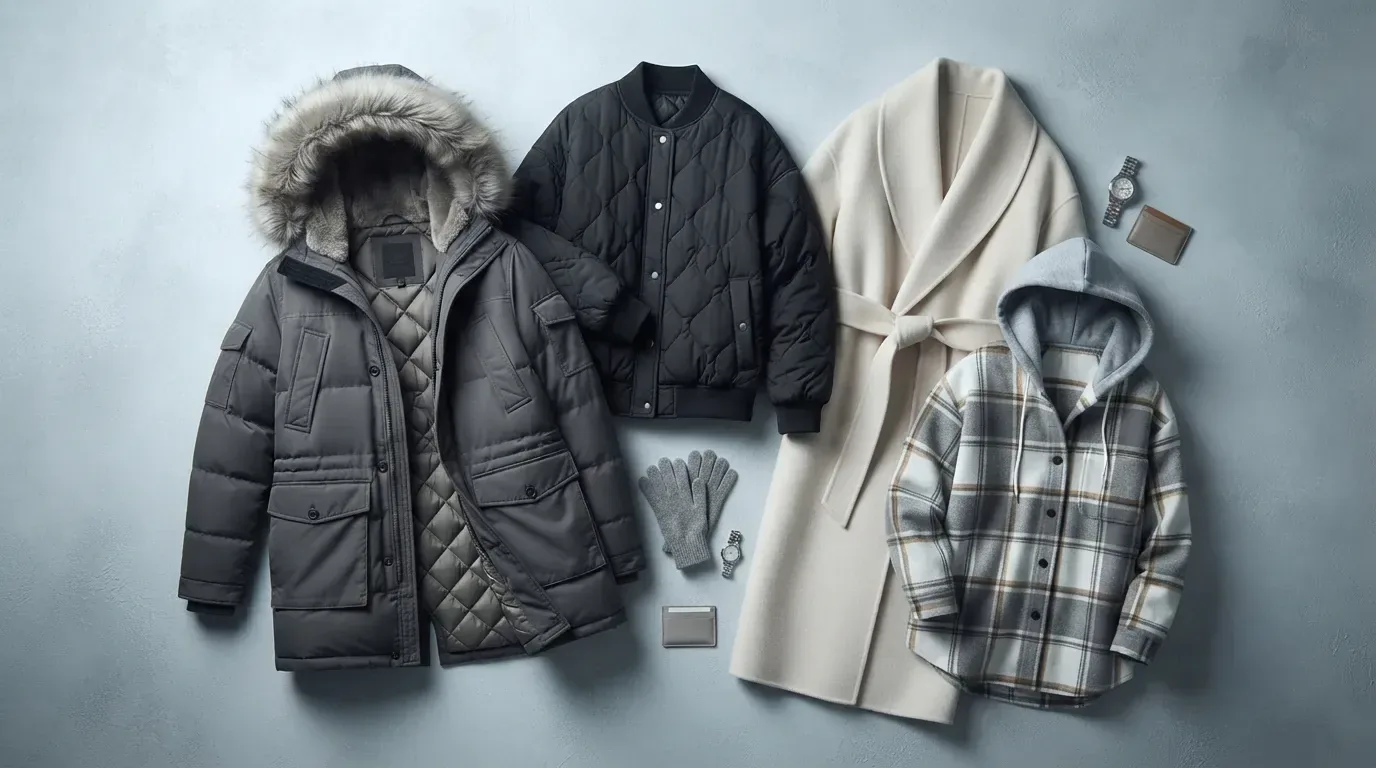
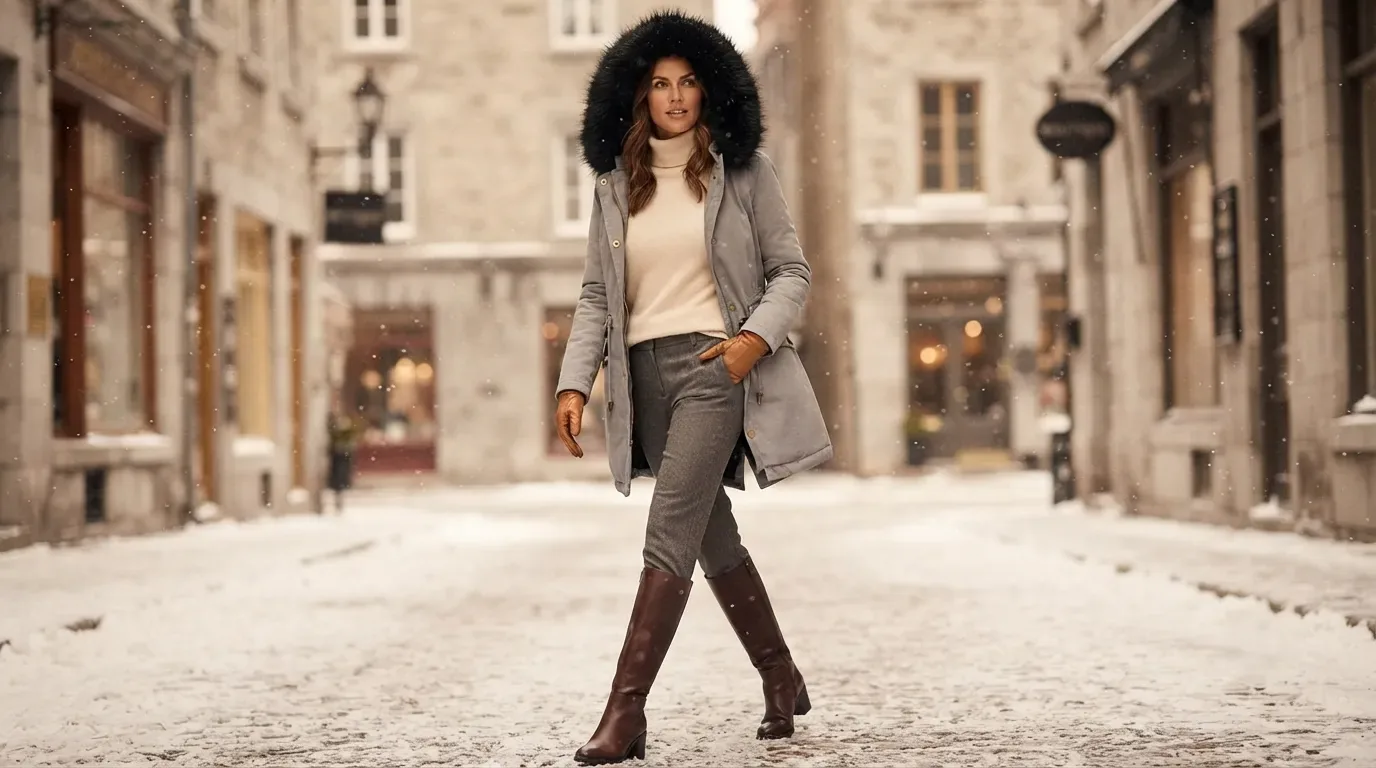
The best women’s winter coat of 2026 The best women’s winter coat of 2026 depends on climate and use case — think a plush hooded parka for extreme cold, a quilted jacket for daily commutes and a wool-blend coat for smart-casual days transitioning from office to evening. No single coat covers every winter scenario, which is why most complete wardrobes need at least two distinct outerwear pieces.
This guide covers the four main outerwear categories worth owning in 2026, what fabric and construction details actually keep a coat warm, and how to choose between styles based on climate and daily routine.
Plush Parkas for Extreme Cold
A plush hooded parka is the right choice for the coldest months and the most exposed commutes, since the insulated hood and longer length protect against wind chill better than a cropped jacket or blazer-style coat. A parka works best for anyone walking or waiting outdoors regularly during winter, rather than moving quickly between a heated car and an indoor destination.
The hood itself is a functional detail worth checking before buying — a hood with drawstring adjustment and enough room for a hat underneath performs noticeably better in wind and snow than a fixed hood that can’t be tightened against gusts.
A hooded parka is the right choice when:
- Daily commutes involve 10+ minutes outdoors in cold weather
- Winters regularly drop below freezing
- Wind and precipitation are common during commute hours
Quilted Jackets for Daily Commutes
A quilted, button-down winter jacket provides enough insulation for most daily winter commutes without the bulk of a full-length parka. The Casual Stitched Winter Jacket uses quilted construction specifically for this balance of warmth and everyday wearability.
Quilted jackets also layer more easily over blazers and structured tops than a bulkier parka does, which matters for anyone commuting directly into an office environment.
Buttons vs. Zippers for Temperature Control
A button-down quilted jacket allows more precise temperature regulation than a zip-only style, since buttons can be adjusted individually rather than committing to fully open or fully closed.

Wool Coats for Smart-Casual Days
A wool-blend commuter coat differs from a winter parka by prioritizing a sleek, tailored silhouette over maximum insulation. The Leisure Commute Woolen Coat is designed for exactly this fall-to-winter transitional period.
A wool commuter coat is the piece most likely to be worn five days a week from November through February, since it layers over both blazers and dresses without adding visual bulk.
A wool commuter coat works well for:
- Office-to-evening transitions without a coat change
- Moderate winter climates with shorter outdoor exposure
- Pairing over both blazers and dresses

Hooded Jackets for Fall Weather
Hooded jackets are useful for unpredictable fall weather because the hood provides quick protection against sudden wind or light rain without requiring a full coat change. The Plaid Hooded Jacket fits this transitional role between a light cardigan and a heavier winter coat.
This category is often underrated in wardrobe planning, since it doesn’t get the same attention as a dramatic winter parka but ends up worn more frequently across the longer stretch of fall weather.
Plaid and Pattern Versatility
A plaid or subtle-pattern hooded jacket works across more outfits than a purely technical rain shell, since it can be worn to the office or on a casual outing without looking like strictly outdoor gear.
Options for Plus-Size Shoppers
Plus-size shoppers now have dedicated oversized hooded coat options in 2026, closing a gap that outerwear brands largely ignored by simply grading up standard-fit designs. The Plus Size Oversized Hooded Long Coat is built specifically to account for proportion and drape differently than a resized standard coat.
In this category, an oversized silhouette is a conscious style choice rather than a sizing accommodation and this changes the way it should be styled underneath.
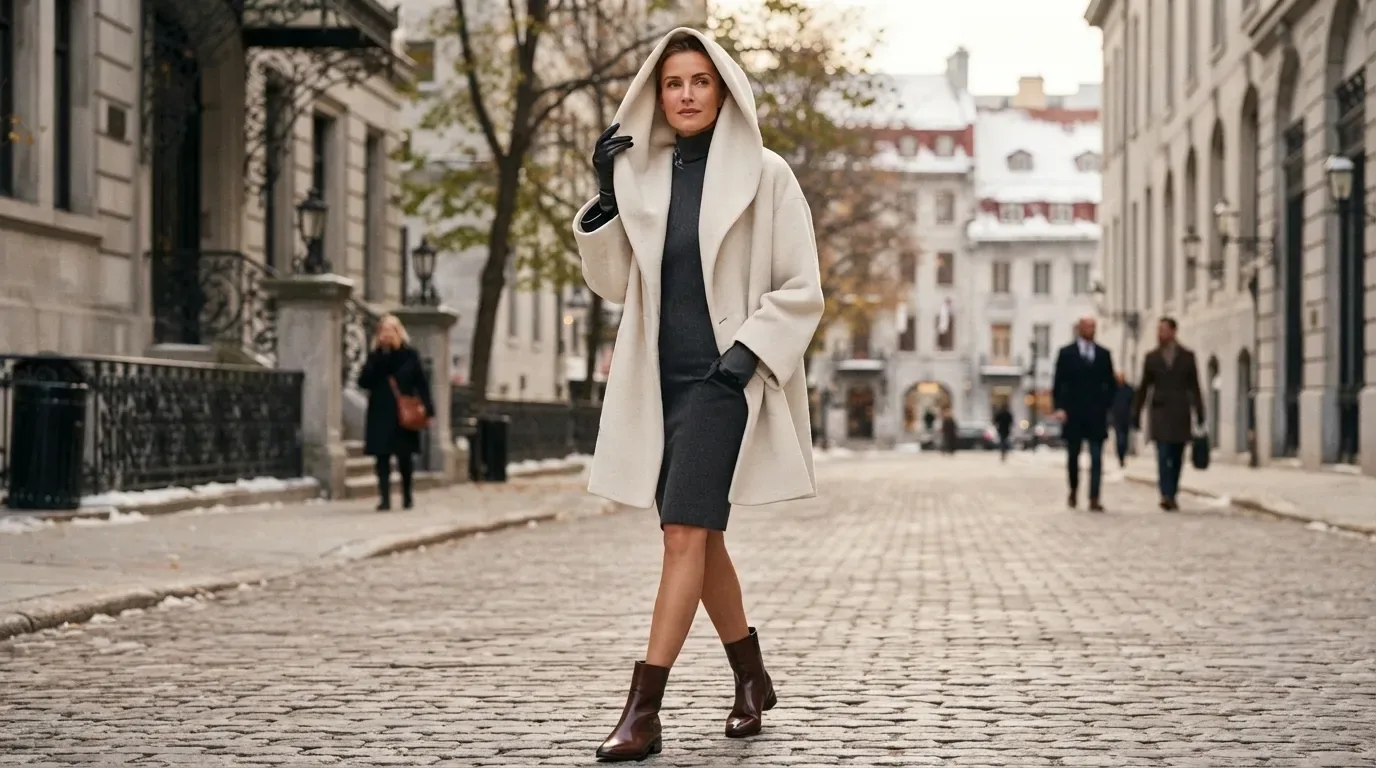
Balancing Proportions Underneath
Opt for slimmer-fitting layers underneath your oversized coat to balance the proportions. Oversized looks can sometimes come across as shapeless instead of intentional.
Layering Outerwear Correctly
The thinnest and most fitted things should go closest to the body, with the looser items on top of that, and the coat being the most roomy. This order prevents uneven bulk build-up and keeps the silhouette of the coat looking intentional.
The standard formula that works in most winter climates is a base layer, like a fitted long-sleeve top, a mid-layer, like a knit jumper and an outer coat that is sized to fit comfortably over the two.
Matching Coat Length to Proportions
A coat that ends at mid-thigh generally proportions well on most body types, while a knee-length or longer coat requires attention to overall silhouette so it doesn’t overwhelm a shorter frame.
Choosing Coat Color Strategically
A winter coat works best in a neutral color — black, navy, camel, or khaki — that matches with the widest range of outfits underneath, since the coat is often the outermost and most visible layer for a large portion of the day. Statement-colored coats can work but typically limit how many outfits they pair well with underneath.
Buyers building a first winter coat should prioritize a neutral shade, then consider a bolder color as a second, more specific-use piece once the wardrobe basics are covered.
Judging Insulation Quality Online
Stitch density in a quilted pattern is a reliable indicator of insulation quality — tighter, closer stitching holds fill material in place better than widely spaced quilting, which can shift and leave cold spots after repeated wear and washing. Checking product photos for stitch spacing is a practical way to judge this before buying online.
Fill weight, when listed, is another useful indicator: higher fill weight generally means more warmth per square inch, though it also adds bulk, so the right balance depends on how extreme the intended climate actually is.
Down vs. Synthetic Fill
Down fill has the best warmth to weight ratio, but performs poorly when wet and often requires dry cleaning. It’s heavier to provide the same level of warmth, but synthetic fill still insulates when wet, making it a more practical choice for wet and unpredictable winter climates.
Building a Capsule Outerwear Rotation
A capsule outerwear rotation built around three pieces — one insulated coat, one tailored coat, and one hooded jacket — covers nearly every temperature and occasion a typical fall-through-winter season presents. Adding a fourth or fifth coat rarely expands functional coverage; it usually just adds redundancy in a temperature range already covered.
This approach also simplifies packing for winter travel, since the same three-piece logic applies whether dressing for a local commute or a trip to a colder or milder climate than home.
Adjusting the Rotation for Milder Climates
Buyers in milder climates can often skip the heaviest parka option entirely, relying instead on a tailored wool coat paired with a hooded jacket for the occasional colder snap, unless travel to colder regions is planned during the season.
FAQs:
How Many Coats Are Needed?
A winter wardrobe typically needs two coats: one heavier option for the coldest days, and one lighter, more tailored option for daily commutes and office wear. A third piece — a hooded jacket for fall — rounds out most wardrobes.
Should a Coat Be Bought a Size Up?
Yes, in most cases — sizing a winter coat slightly larger allows room for a sweater or blazer underneath without restricting arm movement. Coats for milder fall weather can generally be sized true-to-fit.
How Should Outerwear Be Cleaned?
Most quilted and wool-blend coats should be spot-cleaned or professionally cleaned rather than machine-washed, since insulation and structure can shift or clump in a washing machine.
How Should Coats Be Stored Off-Season?
Instead of folding coats into a drawer, hang them on robust, wide hangers to help maintain their shape between seasons, particularly structured wool coats that can develop permanent creases when squashed for months.
Can One Coat Work for Both Casual and Office Wear?
Yes—A wool-blend commuter coat in a neutral colour works for both settings, usually, since its tailored silhouette reads as polished over office wear, and relaxed enough over jeans and a jumper for weekend errands.
Key Takeaways
The best outerwear of 2026 includes one insulated piece for the coldest days, one tailored commuter coat for everyday work wear and one hooded jacket to handle fall’s unpredictable weather.
Quick reference for a winter outerwear wardrobe:
- Coldest days: plush hooded parka or heavy quilted jacket
- Daily office commute: wool-blend commuter coat
- Fall transitional weather: hooded jacket
- Plus-size shoppers: dedicated oversized hooded coat styles
Insulation matters less than fit and use-case match — a beautifully warm parka worn to an office job with a short indoor commute will get less use than a lighter, more tailored coat chosen for the actual daily routine it needs to serve. Matching outerwear purchases to real commute patterns, rather than to the coldest possible day of the year, produces a wardrobe that earns its closet space through actual use.
