


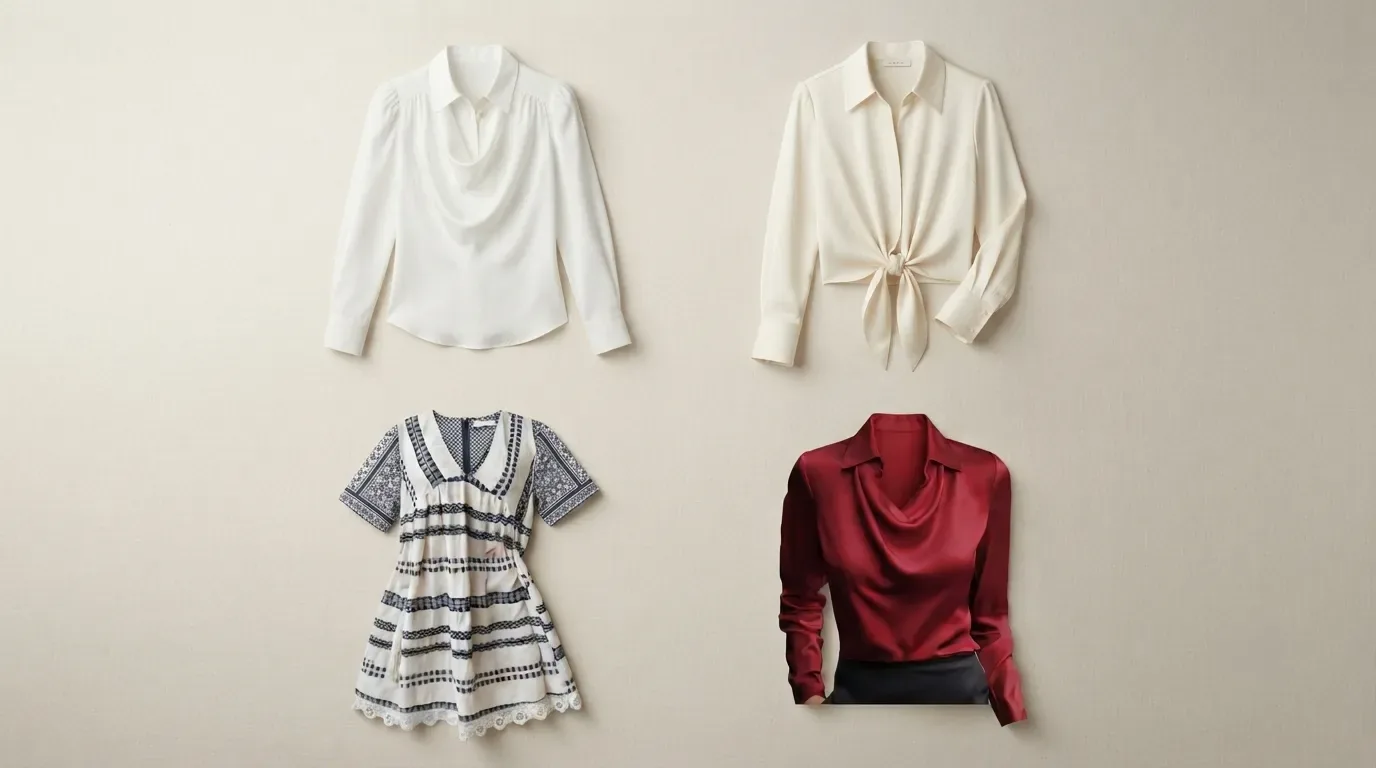
The best women’s office outfit for 2026 is a structured commuter blouse or collared dress in a wrinkle-resistant fabric that needs no adjustment between the morning commute and an evening meeting. Office style in 2026 has moved away from stiff, formal separates and toward flexible pieces that carry through a full workday.
This guide covers the blouses and dresses worth owning for office and commuter wear, what fabric and cut details matter most, and how to build a five-day rotation from four or five core pieces.
Commuter-Ready Fabric
A blouse is commuter-ready in 2026 when it resists wrinkling on a train or in a car seat and holds its shape without needing a full re-tuck after sitting for an hour. The Commuter Collared Blouse is built specifically around this requirement, using a fabric blend tested for exactly this kind of daily wear.
Solid colors outperform patterns in this category because they mix more easily with different trouser or skirt colors across a work week. A single well-made commuter blouse typically gets worn more often than three patterned blouses combined, simply because it never clashes with whatever else is already planned for the day.

Fabric Blends That Resist Wrinkles
Polyester and polyester-spandex blends resist wrinkling significantly better than pure cotton or silk, which is why most commuter-specific blouses use these blends instead of natural fibers alone.
Satin Blouses for Client Days
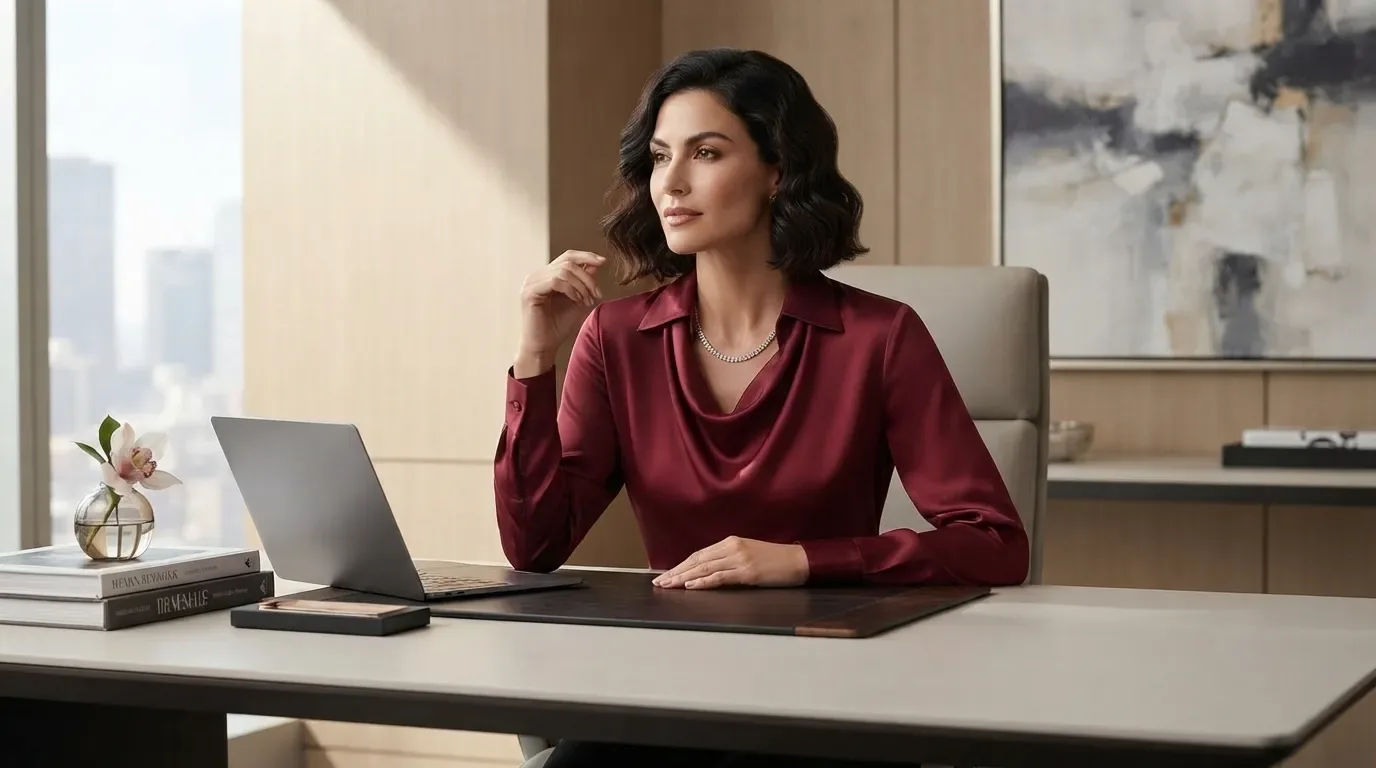
A draped satin blouse works for daily office wear when the drape is structured enough to avoid gaping at the chest and the fabric resists static. The Elegant Draped Satin Blouse uses a swing collar design that adds polish without requiring a blazer.
Satin blouses read as more elevated than cotton or knit alternatives, making them a strong choice for client-facing days, even though they’re not typically worn five days a week.
When to Wear Satin Alone vs. Layered
A satin blouse works alone on warmer days or in relaxed offices, but layers well under a blazer for meetings that call for extra polish.
Tie-Front Blouses for Flexibility
A tie-front blouse fits into a work wardrobe as a slightly more relaxed alternative to a button-down. The Tie-Front Commuter Blouse offers this middle ground — sophisticated enough for the office, relaxed enough for a client lunch afterward.
The tie detail also solves a common fit problem: it lets a blouse be adjusted at the waist without tailoring.
A tie-front blouse works well for:
- Days with a client lunch or after-work event
- Offices with a business-casual dress code
- Pairing with both trousers and pencil skirts
Mini Dresses for Low-Effort Polish
A mini dress replaces a blouse-and-trouser combination on days that call for a polished, one-piece outfit without extra effort. The Geometric Print V-Neck Mini Dress is designed for exactly this scenario.
This kind of dress works particularly well on Fridays or lighter meeting days, when full separates feel like more effort than the day requires.

Building a Five-Day Rotation
Two commuter blouses, one satin blouse, one mini dress, and one blazer can combine into five distinct-looking days with almost no visible repetition.
Rounding Out the Blouse Drawer
A work wardrobe typically needs four to six blouses to avoid visible repetition across a two-week period. A crew-neck, solid-color ruched blouse adds versatility to this rotation, pairing easily with both skirts and trousers.
Fewer than four blouses tends to feel repetitive quickly; more than six often means pieces sit unworn in the closet.

Fitted vs. Relaxed Cuts
A slightly relaxed fit through the body with a more fitted sleeve tends to work best, staying comfortable through a full seated workday while still looking tailored. Relaxed-fit blouses also layer more easily under blazers without creating bulk at the shoulder or underarm, which fully fitted styles can struggle with once a jacket is added on top.
Choosing Between Neutral and Statement Colors
A commuter wardrobe built mostly around neutral colors — navy, black, cream, and soft gray — combines more freely with different bottoms than one built around bright or trend-driven colors. This is less about personal style preference and more about practical math: five neutral tops paired with three bottoms creates fifteen distinct outfits, while five bright, hard-to-match tops might only combine cleanly with one or two bottoms each.
A single statement color, added deliberately rather than as the default, still has a place in a commuter wardrobe. It works best as the piece worn for a specific occasion — a presentation, an interview follow-up, a client dinner — rather than as a everyday basic competing with the neutral rotation for closet space.
Adapting Across Seasons
Office wear should change primarily in layering, not in the core pieces themselves — a blouse worn alone in summer pairs with a cardigan or blazer in winter. This keeps the core rotation small while still adapting to temperature changes.
Fabric weight is the other seasonal lever. A lightweight blouse works through spring and summer, while a slightly heavier knit or satin option carries better through fall and winter.
One Rotation, Four Seasons
The same five pieces can carry across all four seasons simply by adjusting what’s layered on top — a blazer or cardigan in cooler months and bare arms in warmer months.
Accessories for Commuter Outfits
A structured tote bag, low block heels or comfortable flats, and one simple layering piece complete most commuter outfits without adding complexity to the morning routine. A bag that fits a laptop and a water bottle matters more than one chosen purely for looks.
Jewelry in office settings tends to work best kept minimal — one or two pieces rather than a full stack, since minimal accessories photograph better on video calls.
Shoes That Work for a Full Commute Day
A low block heel or a structured flat handles both a long walk to the station and a full day standing in meetings better than a thin stiletto, which tends to wear down comfort well before the workday ends. Comfort at this level isn’t a downgrade from formal — most modern office shoe designs balance both without looking casual.
Keeping one backup pair of flats in a desk drawer or bag solves the common problem of a commute shoe that isn’t quite right for a full day of walking between meetings.
Bags Built for Commuting, Not Just Looks
A structured tote with a laptop sleeve and a secure top closure handles a commute better than an open shoulder bag, which can shift and spill contents on a crowded train or bus. Function should come first in this category, since a bag gets used daily far more than any single blouse or dress.
Handling Wrinkle-Prone Days
Even wrinkle-resistant fabrics benefit from a few backup tricks on unusually long or humid commute days. Hanging a blouse near a bathroom door during a morning shower adds light steam that relaxes minor creases without needing a full iron.
A small travel-size wrinkle-release spray kept in a desk drawer or bag is a practical backup for blouses that see heavy weekly rotation, especially during humid summer months when fabric holds moisture longer.
When Ironing Is Still Worth the Time
Structured collars and cuffs on commuter blouses sometimes need a quick iron touch-up even on wrinkle-resistant fabric, since these areas see the most folding pressure in a bag or suitcase. A travel iron or a hotel-room iron used only on collar and cuff areas takes under two minutes and noticeably sharpens the overall look.
Building Confidence Through Consistency
A consistent, well-fitted rotation does more for professional confidence than an occasional statement piece worn once and forgotten. Colleagues and clients tend to remember someone as reliably put-together rather than recalling any single outfit, which is exactly the effect a repeatable four or five-piece rotation is designed to create.
This is also the most sustainable long-term approach to an office wardrobe — fewer total purchases, less decision fatigue each morning, and a lower chance of a favorite piece being discontinued right when it’s needed most.
FAQs:
How Many Blouses Are Enough?
Usually four to six blouses will do the trick in a work wardrobe to avoid repeating the same look over a two-week period, if mixed and matched with two or three different bottoms.
Solid Colors or Patterns?
Solid colors are generally the better investment for office wear because they mix and match with more pieces already in the closet, while patterns tend to work with only one or two specific bottoms.
How Often Should Blouses Be Replaced?
The blouses worn by commuters two or three times a week are usually replaced in 12 to 18 months because the fabric loses its wrinkle resistance and the color begins to fade after repeated washing.
Can the Same Blouse Work for Video Calls?
Yes — a well-fitted commuter blouse works equally well for in-office days and remote video calls, since the collar and neckline detail reads the same way on camera as it does in person.
What About Layering for Air-Conditioned Offices?
A lightweight cardigan kept at the desk solves the common problem of offices running colder than the outdoor commute temperature. Choosing a cardigan in a neutral shade that matches most of the blouse rotation avoids needing a second or third backup layer.
Key Takeaways
The strongest office wardrobe for 2026 combines one commuter collared blouse, one satin blouse for client-facing days, one tie-front blouse for business-casual flexibility, and one mini dress for low-effort polished days.
Quick reference for an office wardrobe:
- Daily basics: 2 commuter collared blouses in neutral colors
- Client-facing days: 1 draped satin blouse
- Business-casual flexibility: 1 tie-front blouse
- Low-effort polish: 1 geometric print mini dress
Fabric that resists wrinkling matters more than any single design detail — a blouse that looks perfect on a hanger but creases after twenty minutes in a car seat will get worn less than a slightly plainer, more durable alternative. Building the rotation around this principle, rather than around trend-driven prints, is what keeps an office wardrobe functional season after season.
Most professionals who successfully simplify their office wardrobe report the same outcome: fewer decisions each morning, less laundry backlog, and a wardrobe that photographs consistently well across months of video calls and in-person meetings alike. The four or five pieces highlighted throughout this guide are meant as a starting foundation, not a ceiling — once the rotation feels natural, adding a fifth or sixth piece in a favorite color becomes a low-risk way to expand without disrupting what already works.
